Pinterest Conversions API sends website events server-side for more complete tracking and stronger match rates than browser-only Pinterest Tag delivery. SignalSight connects your site to Pinterest, deduplicates browser and server signals, and keeps your paid campaigns backed by reliable conversion data.
Before you start
You need a SignalSight account and a Pinterest Ads account. If you haven't signed up yet, follow Account Creation first.
Get Started
Running browser and server tracking together improves signal quality and coverage. SignalSight supports Pinterest CAPI event deduplication — shared event_id values between browser and server events prevent the same action from being counted twice.
Both standard and custom events are supported. Pinterest standard events include:
- PageVisit — primary page views (product pages, articles, etc.)
- ViewCategory — category page views
- Search — on-site search queries
- AddToCart — items added to cart
- Checkout — completed purchases
- WatchVideo — video views
- Signup — product or service sign-ups
- Lead — interest in your products or services
Pinterest CAPI Tracker Creation
Open the Tracker Creation Wizard under Signal in the left menu (or go to Trackers → Create Tracker). The first step is creating a source.
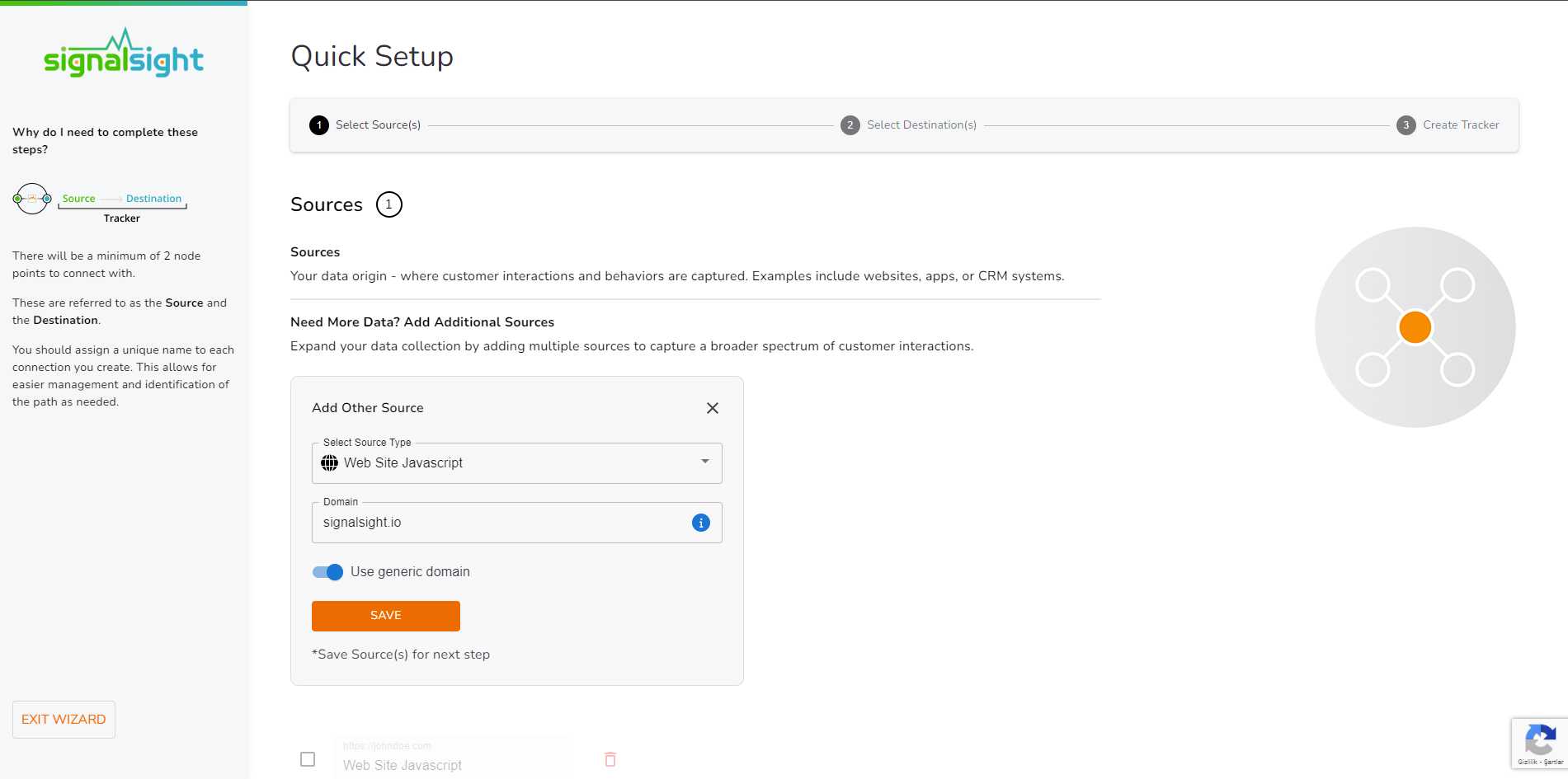
Step 1 — Website Source
Select Website Javascript as the source type. This is the source used for on-site CAPI installations.
The Usage field is set automatically for this source type — Web is included by default. In the Domain field, enter the full site URL where the installation will run, starting with https://.
Click Save, then Next to continue to the destination step.
Step 2 — Pinterest Destination
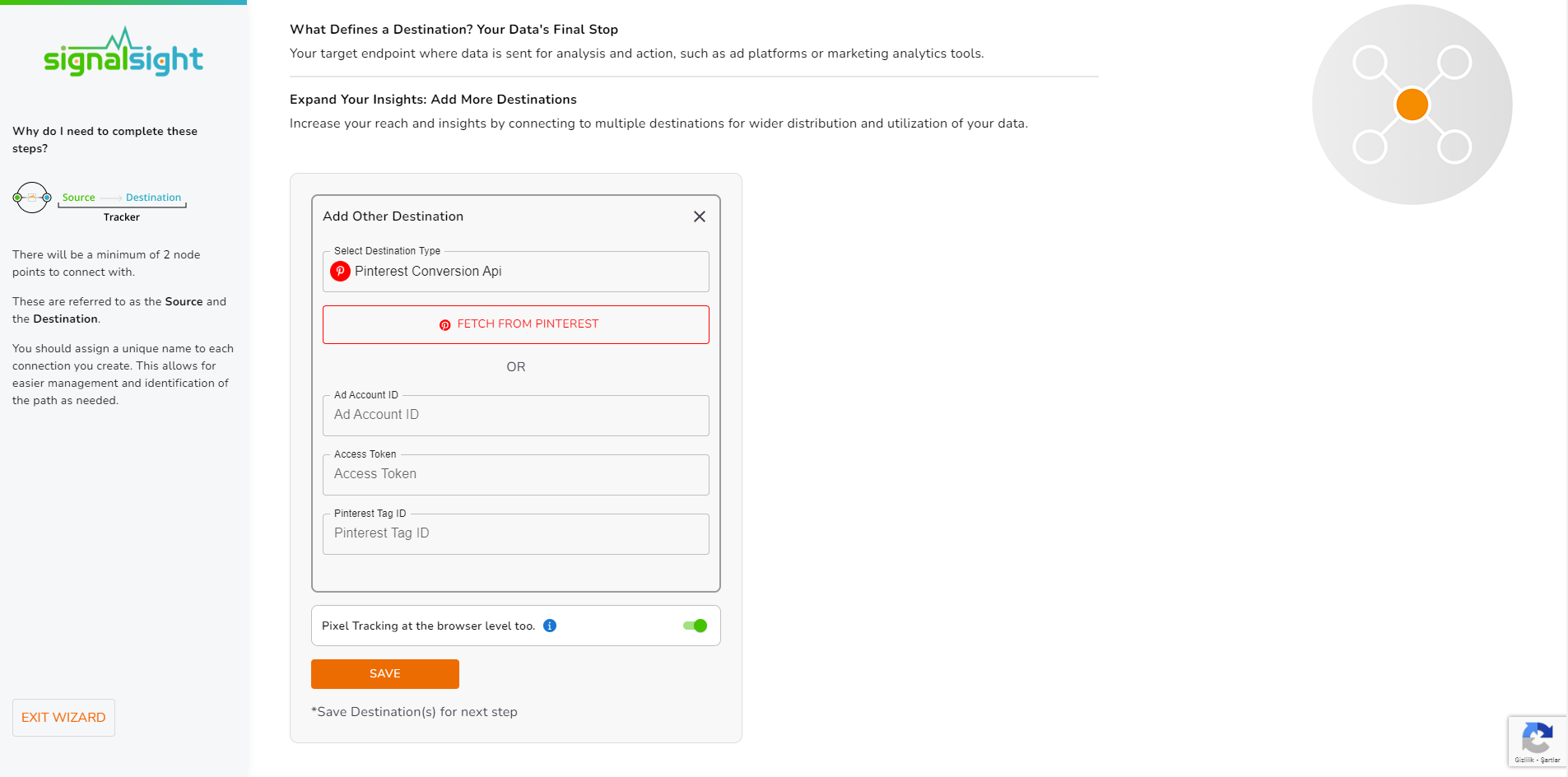
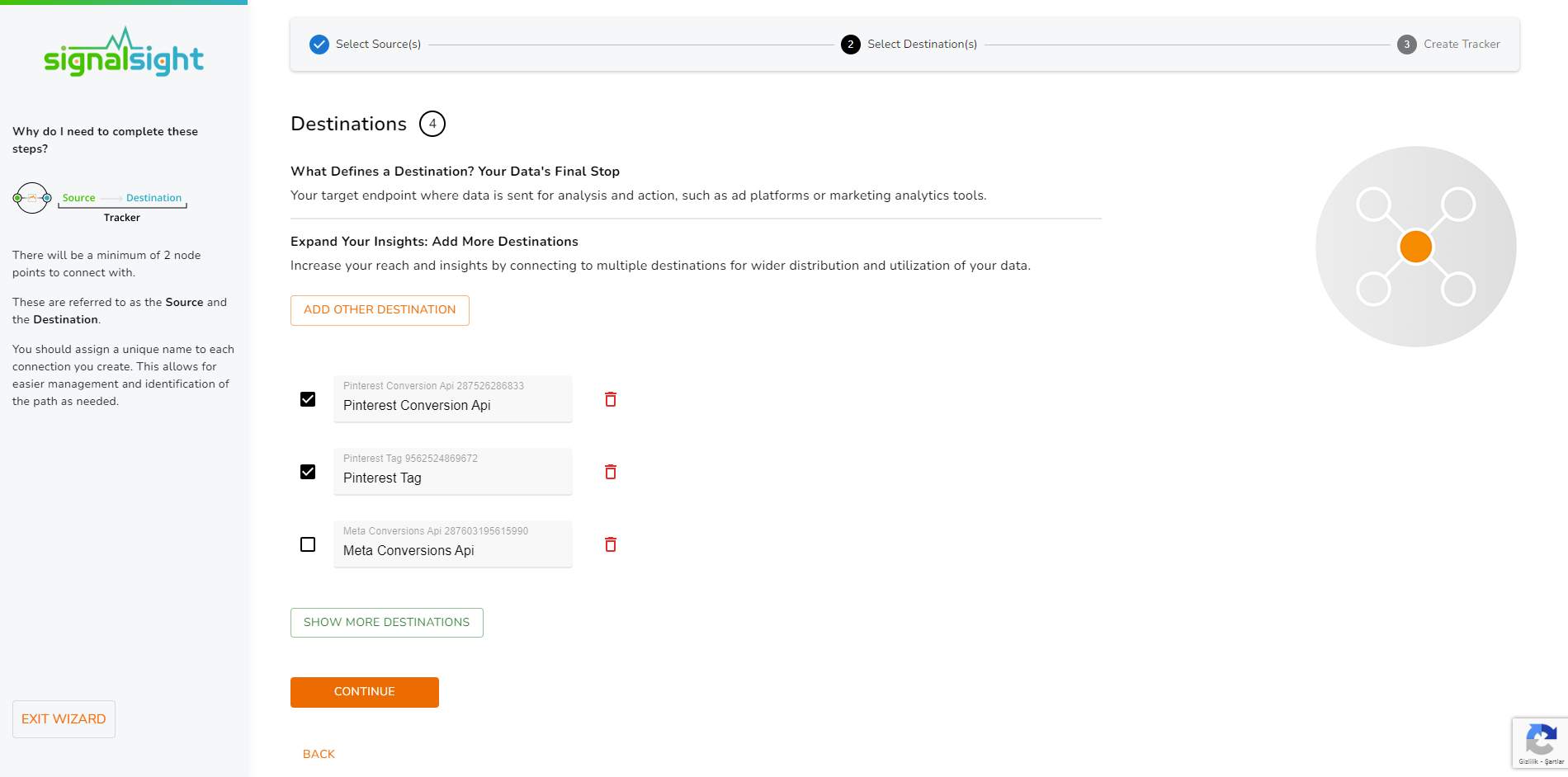
Choose Pinterest Conversion API from the destination list. Enter your Ad Account ID, Access Token, and Pinterest Tag ID. SignalSight creates two destinations — Pinterest Tag and Pinterest Conversion API — so browser and server events can be deduplicated together.
Click Save, then Next when the destination is configured.
How to Find Ad Account ID and Access Token
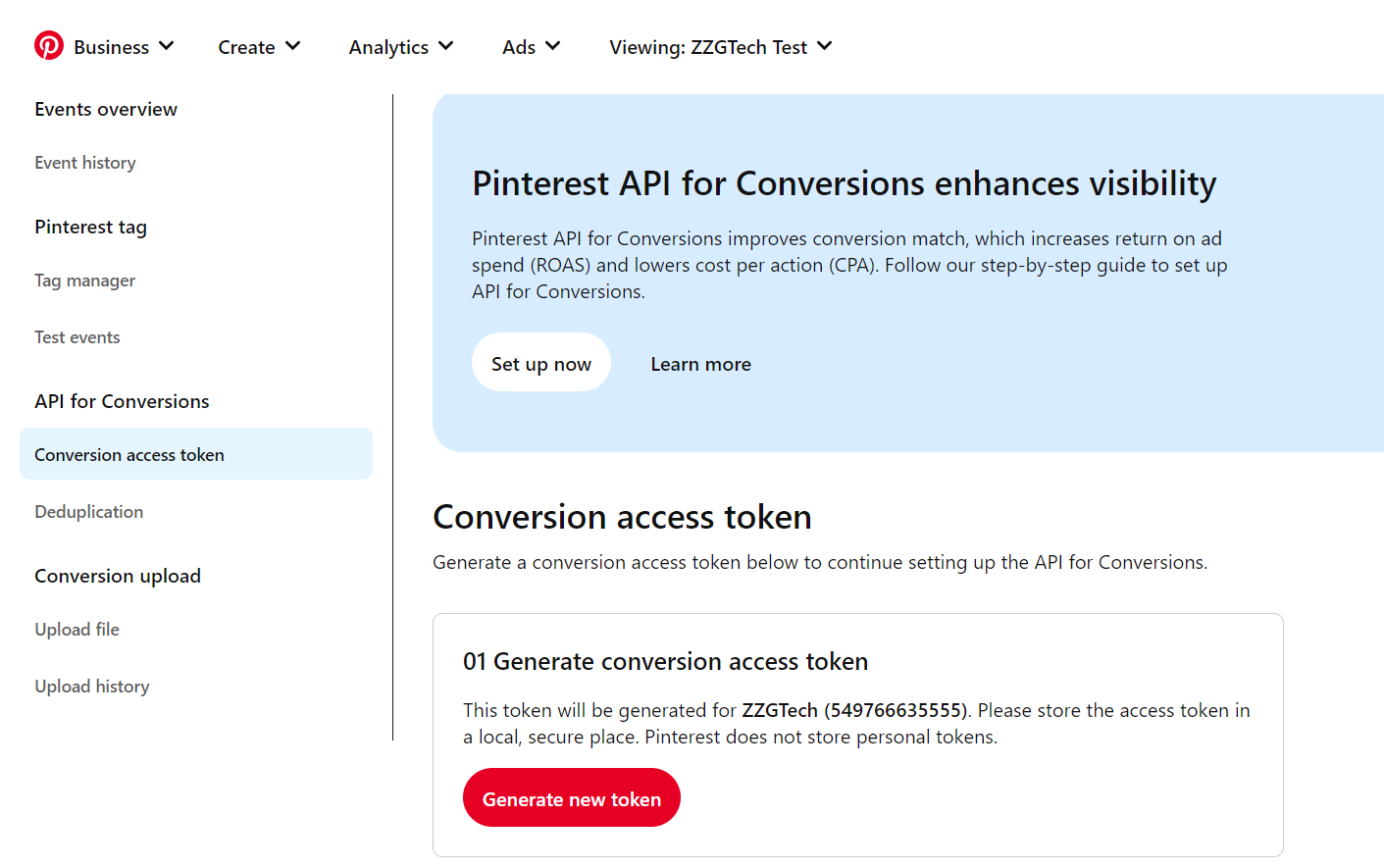
- Log in to your Pinterest Ads account.
- Click Ads in the top menu, then select Conversions.
- In the left menu, choose Conversion Access Token.
- On the page that opens, find the Generate Conversion Access Token section — your Ad Account ID is shown here, along with the button to create an Access Token.
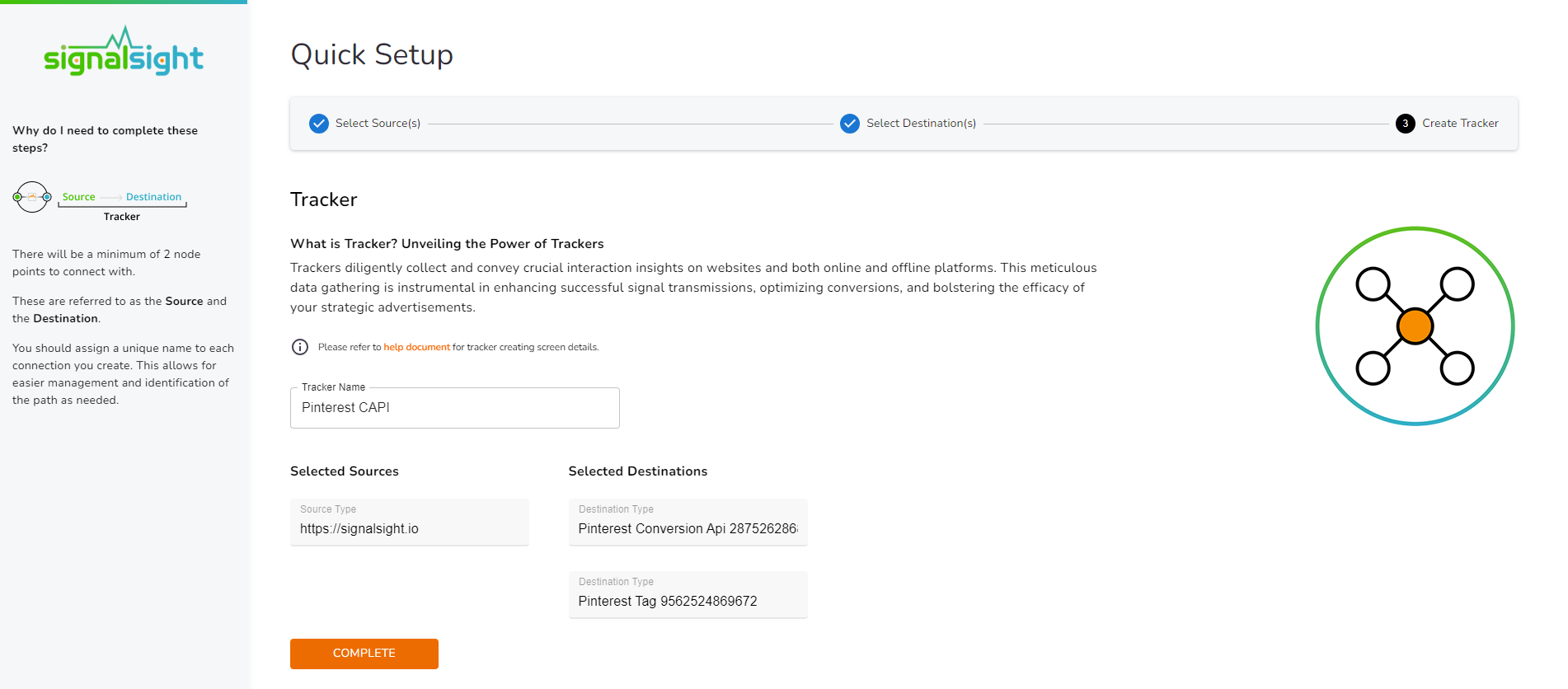
Step 3 — Name and Complete
In the third wizard step, name your tracker and review the source and destination summary. Click Complete to finish.
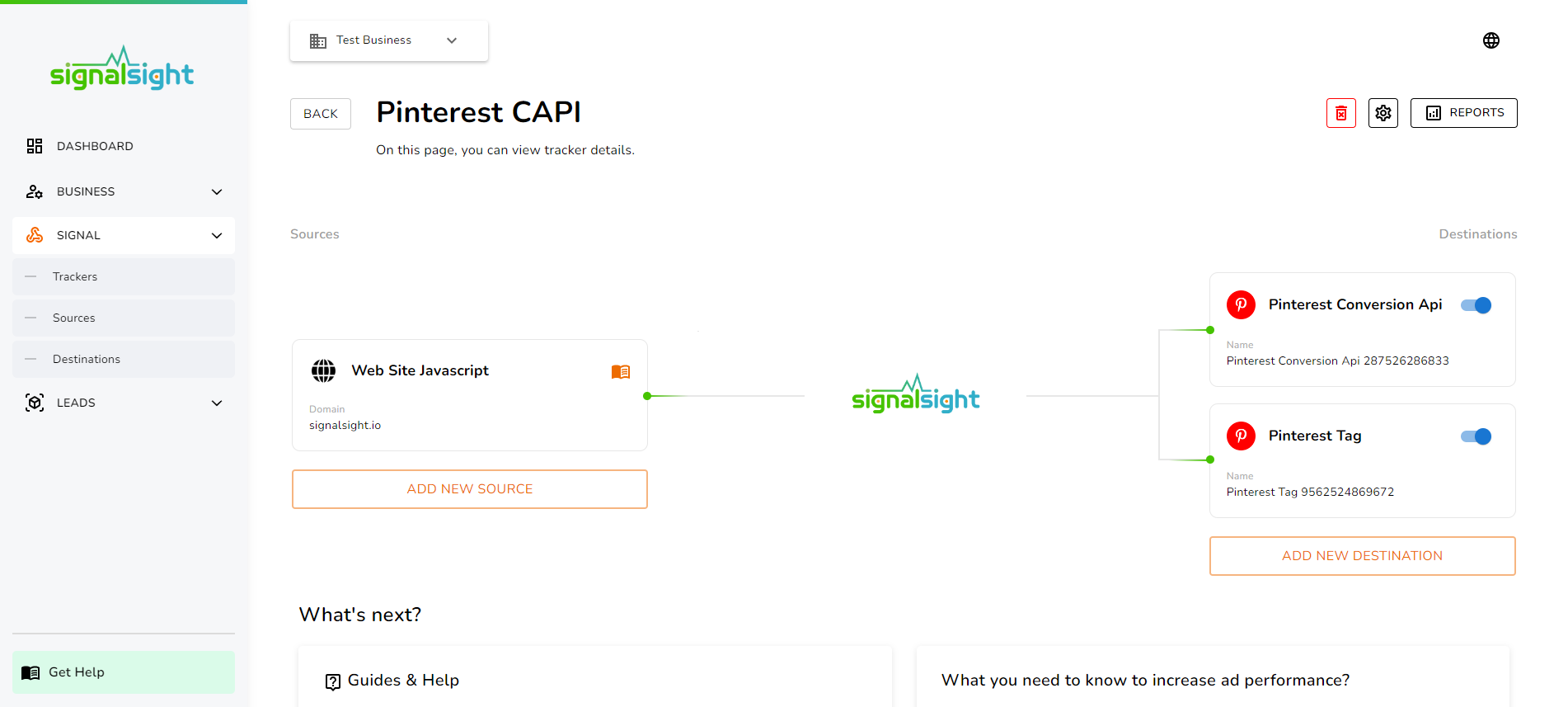
After creation, the tracker detail page opens. From here you can add or remove sources and destinations, edit settings, or follow the installation guide.
GTM / Frontend Code Implementation
Tag Manager experience required
This step requires familiarity with Google Tag Manager. If you're not the person managing your tags, share this section with your technical team.
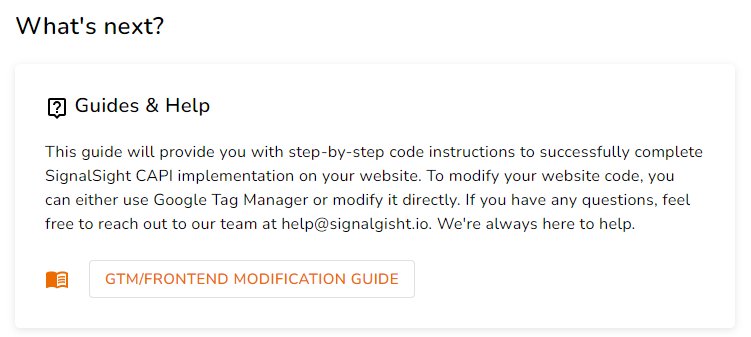
With your tracker ready, follow the installation guide on the tracker detail page. The What's Next section shows the code snippets and event examples for your setup.
- Remove or comment out the
pintrcalls in your existing Pinterest Tag base code. - Copy the full block under Loading Code and Page View Event in the guide and deploy it on every page (in GTM, create a new tag with an all-pages trigger).
- Pause all other Pinterest tags in Tag Manager or your codebase so only SignalSight fires events.
- Add
p2sq.push()event snippets for each conversion you want to track — see Basic CAPI Installation for the full event reference. - Test with the Pinterest Tag Helper browser extension.
Consent Management & Data Privacy
To comply with data protection regulations (GDPR, CCPA, and similar frameworks), only activate tracking scripts after the user has given consent through your Consent Management Platform (CMP). SignalSight respects your consent configuration — events are not sent until consent is granted.
Frequently Asked Questions
Why does one destination create both Pinterest Tag and Conversion API?
SignalSight sets up browser-side Pinterest Tag and server-side Conversion API together so you get full coverage with automatic deduplication. Shared event IDs prevent the same conversion from being counted twice.
Do I need to pause my existing Pinterest tags?
Yes. Comment out pintr calls in your Pinterest base code and pause other Pinterest tags in GTM or your codebase. SignalSight takes over event firing to avoid duplicate signals.
Where do I find my Pinterest Tag ID?
In Pinterest Ads, go to Ads → Conversions and open your tag settings. The Tag ID is shown alongside your tag configuration — enter it in the Pinterest Conversion API destination in SignalSight.
Can I add Pinterest to a tracker that already has Meta CAPI?
Yes. Open the tracker detail page and add a Pinterest Conversion API destination. One tracker can route the same source events to multiple ad platforms.